How to Write the First Chapter of Dark Romance: The Hook That Locks Readers In
Dark romance is unforgiving on page one. Readers signed up for moral ambiguity, intensity, and a love interest who would destroy everything if he could not have her. If those three signals are missing by paragraph five, they close the book.
A dark romance first chapter must signal danger, establish the hero’s ruthless baseline before softness, preserve the heroine’s agency under constraint, land one charged physical contact, and end on unresolved compulsion — never safety or closure.
- Answer three questions by paragraph four: who is at risk, who holds power, and why she cannot walk away.
- Show the hero’s ruthlessness toward others before he breaks pattern for the heroine — contrast is the romance promise.
- Vulnerability ≠ passivity: she must make at least one independent choice under pressure.
- Place one concrete touch near chapter climax, written through the recipient’s sensory experience.
- End without resolution — curiosity gap, unfinished action, or a reframing statement that forces chapter two.
Dark romance is unforgiving on its first page. Readers know what they signed up for — moral ambiguity, intensity, and a love interest who would destroy everything if he could not have her. If your opening fails to communicate all three within the first five paragraphs, they close the book.
This guide covers every critical element of a dark romance first chapter — why each matters, what happens when it fails, and how to fix it. Pair it with Wound, Lie, and Personal Logic for the hero’s psychology, the trope dictionary for structure, and the Dark Romance Writers' Guides capsule for starter kits and the full dark-hero system.
Rule 1: Start with danger, not introduction
Never open with character introductions, setting tours, or backstory. Open with an action or situation that communicates threat first. Dark romance readers want to feel unsafe before they feel attracted — danger creates the charge that makes attraction feel transgressive.
Your first scene should answer three questions immediately:
- What puts someone at risk? (physical, social, psychological)
- Who holds power over them?
- Why can’t they just walk away?
If none are answered by paragraph four, you started too safely.
Bad pattern: “Sarah woke to sunlight streaming through her bedroom window…” — waking up establishes morning, not stakes. By the time darkness arrives, the reader has already filed you as safe fiction. Safety = predictability. Predictability kills tension.
Rule 2: Introduce the hero before they interact
Show who he is through what he does to other people before showing what he does to her. A villain kind to everyone isn’t special. Softness that exists only for her proves exceptional through contrast.
Successful pattern:
Paragraphs 1–5: he commits an act that establishes threat to anyone
Paragraphs 6–15: someone reacts with fear, respect, or compliance
Paragraphs 16–25: he notices something about her that breaks the pattern
Paragraphs 26+: the pattern break intensifies
He didn’t look up when the guards reported the shipment seized. “Then stop sending it through ports I don’t own.” His voice was flat, conversational — like ordering coffee. The head guard swallowed audibly. Nobody corrected Marco Vale. Nobody survived correcting him.
She stood behind the guards, arrived minutes ago for a simple errand. When she looked past them, he had already found her. His eyes narrowed — not with recognition, but with assessment. Like deciding whether to eat something or throw it away.
That was how it began.
Three beats: ruthless baseline → subordinate fear → personal evaluation. Readers understand both characters before a word is spoken between them. Meeting them simultaneously keeps power abstract. For the psychology behind that baseline, use Wound → Lie → Logic.
Study ruthless baselines on Dramance

Owen Mitchell
Mafia underboss
Cold precision, arranged loyalty, protection that looks like a threat.
Open on Dramance →
Sofia Moretti
Mafia heir
Raised in blood, trained in law — steel with a Moretti smile.
Open on Dramance →

Cole Haze
Dangerous Obsessing Lover
Hockey captain, first-round menace — the enforcer who never lets you off the ice.
Open on Dramance →
Asher (Ghost)
Dangerous Obsessing Lover
A fixer who watches from the dark corners — then never looks away.
Open on Dramance →
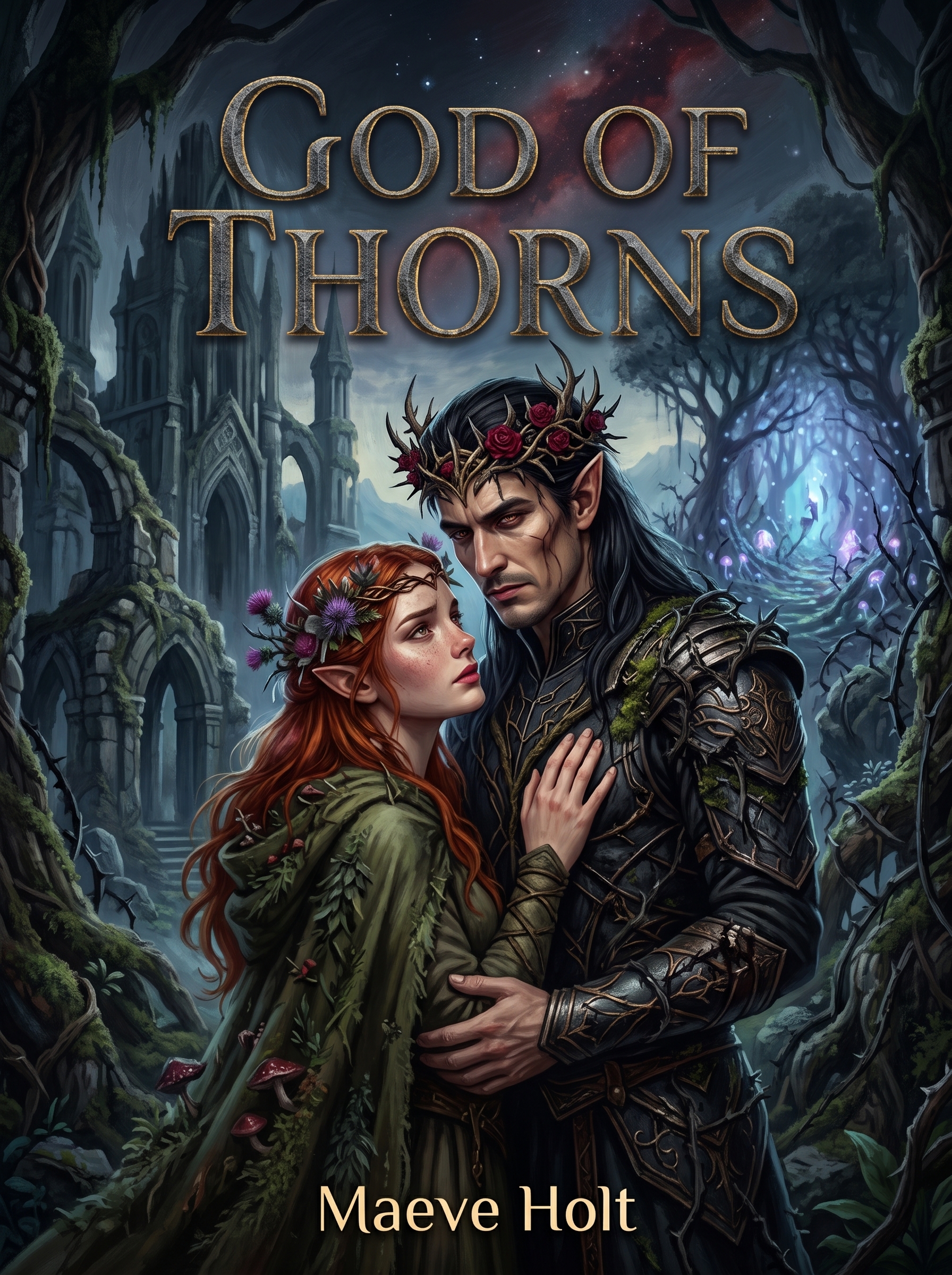
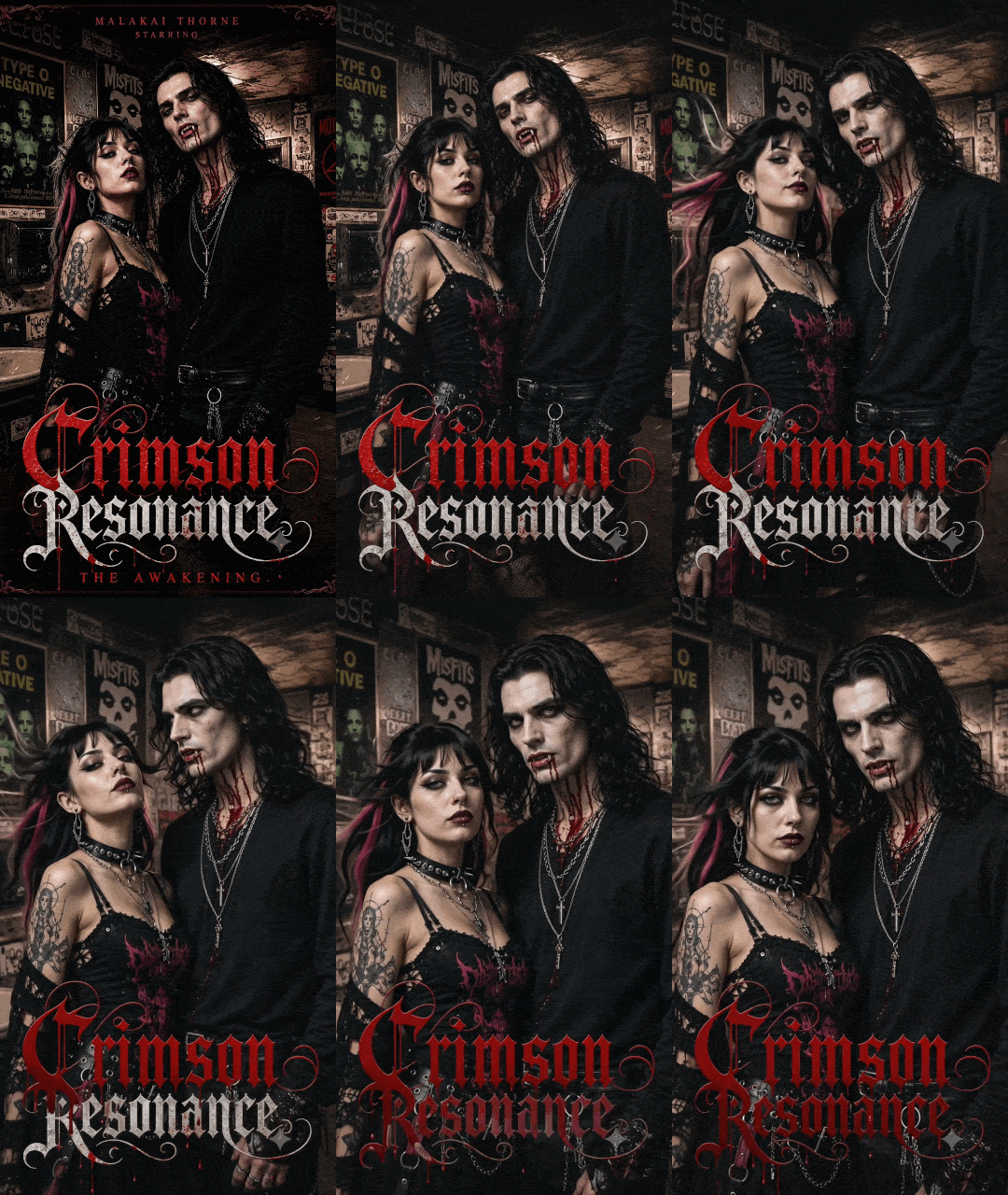
Openings you can play

The Posession Contract
Author: Avery Vaelis
Obsessive Love

Victor Reyne: Owned by the Enemy
Author: Avery Vaelis
Enemies to Lovers


Rule 3: Establish her agency within constraint
She must make choices in chapter one — even inside narrow parameters. If she arrives completely passive (done-to, reacting without decision), readers struggle to identify with her and question whether future romance involves genuine consent.
Give her an immediate choice with stakes: where to stand, whom to look at, which door, whether to speak. Vulnerability means the world threatens her. Passivity means she lacks internal motive. Choosing while terrified is more compelling than choosing casually.
She wanted to run. The hallway stretched infinitely, doors closed on every side. But running meant turning her back on him, and instinct said that would be worse. So she walked forward instead — each step deliberate, shoulders squared. If this ended badly, she’d face it standing.
Afraid. Nowhere safe. Still choosing direction, posture, pace. That models agency under pressure — the same consent architecture the cringe guide insists on later in the book.
Rule 4: Embed one specific physical moment
Somewhere in chapter one, write one concrete instance of contact — a hand grabbing, a finger on a chin, a wrist wrapped. Not a full intimate scene. One touch that communicates intensity, possession, or a boundary violation.
Write contact as experienced by the recipient: texture, temperature, pressure, duration, physiological aftermath. Place it at chapter climax — last ~500 words — after threat, baseline, agency, and mutual notice. It raises stakes from psychological to bodily and pulls the page turn. For intimacy craft beyond the opening, see how to write sex scenes.
Rule 5: End on compulsion, not resolution
Never close chapter one with safety, understanding, or closure. End on unanswered pressure — a curiosity gap, unresolved tension, an action mid-execution, or a statement that reframes everything before it.
Chapter 1 specifically withholds at least one of:
- Something he knows but hasn’t revealed
- Something she perceives but can’t articulate
- An action beginning that continues into chapter 2
He released her wrist. She expected relief. Instead she felt panic — his warmth left her skin cooling so fast she nearly reached for him again. What is wrong with me? He turned away without looking back. She did not tell him she was shaking.
Unanswered question + ongoing physical response + emotional confusion. Ineffective: “She watched him drive away and wondered what had happened tonight.” — tension dissipated; nothing demands continuation.
Rule 6: Communicate moral ambiguity without overexplaining
Readers must understand he operates outside conventional morality — through observation, not exposition. Don’t label him dangerous. Show behavior most people would not do.
| Abstract label | Concrete behavior (write this) |
|---|---|
| He was violent | He ended a conversation with a phone call; ten minutes later a rival warehouse burned |
| He was powerful | Staff cleared a booth without asking — the table belonged to him now |
| He was dangerous | She noticed scars along his ribs and realized he’d taken blows meant for someone else |
| He was obsessive | He knew her schedule from remembered conversations — not from tracking files |
Let readers arrive at “this guy is trouble” themselves. Dumping criminal-empire lore in chapter one kills momentum — reveal organization through consequences of his actions. Trope risk zones live in the trope dictionary.
Rule 7: Establish emotional stakes within 500 words
By the third paragraph minimum, readers should know what is personally at risk for her — identity, reputation, autonomy — not only plot logistics.
| Plot stake alone | Personal stake (use this) |
|---|---|
| Her company is bankrupt | Her father built this company and she failed him |
| They’re locked in a room together | She hates feeling trapped — his presence echoes the worst imprisonment she survived |
| A contract binds them | Accepting means becoming the person she swore she’d never be |
| She needs money | Dependency on him means surrendering the control that kept her alive |
Personal stakes activate emotional memory. Plot stakes stay intellectual; personal stakes trigger somatic response.
Rule 8: Make attraction feel dangerous, not convenient
In contemporary romance, attraction grows through pleasant interaction. In dark romance, it emerges through friction — sometimes in spite of conscious resistance. She (and the reader) should feel drawn to something that logically terrifies her.
She hated that his voice made her skin remember heat. Hated that his scent stayed in her throat hours after he left. Most of all, she hated that when he grabbed her wrist, her body leaned into his grip before her mind registered the threat.
Three “hated” declarations paired with three involuntary responses — conflict explicit and human. That contradiction is the opposite of cringe convenience; audit later scenes with the cringe diagnostic.
First-chapter template
Use as scaffold. Deviate once you understand it internally.
- Paragraphs 1–3: danger signal — consequence before cause
- Paragraphs 4–8: hero baseline + another character’s reaction
- Paragraphs 9–15: she enters via her own action; internal state through behavior
- Paragraphs 16–22: mutual notice — neither looks away first
- Paragraphs 23–28: power demonstration; she resists, complies, or negotiates
- Paragraphs 29–35: one specific touch + physiological aftermath
- Paragraphs 36–end: unresolved ending — action begun, not completed
Common mistakes checklist
- Does paragraph 1 communicate danger or threat?
- Is the hero demonstrated (not described) before meeting her?
- Does she make at least one independent choice?
- Is there a specific, detailed physical contact moment?
- Does the chapter end without resolution?
- Are personal stakes established — not only plot stakes?
- Does attraction feel conflicted rather than easy?
- Is background minimal — revealed through action?
- Would a genre-new reader know this is dark romance from page one?
- Have you cut every sentence that could live in generic (non-dark) romance?
Ready to stress-test the hero under these rules? Play interactive dark romance on Dramance, then open the writers guides for the rest of the craft stack. Market context lives in the 2026 trends report.
FAQ
How should a dark romance first chapter open?
Open with danger or threat — physical, social, or psychological — before introductions or backstory. By paragraph four, readers should know who is at risk, who holds power, and why walking away is impossible or costly.
Should I introduce the hero and heroine together?
Usually no. Establish his baseline ruthlessness toward strangers or subordinates first. Then let the pattern break when he notices her. Meeting them simultaneously keeps the power dynamic abstract.
How do I keep the heroine from feeling passive?
Give her a choice with stakes inside the constraint — where to stand, whether to speak, which door to approach. Vulnerability means the world threatens her; passivity means she has no internal motive.
Where should the first physical contact go?
Near the chapter climax — last ~500 words. One brief, intense touch written through her sensory experience punctuates threat and pulls the reader into chapter two.
What should chapter one never do?
Never end on safety, understanding, or closure. Never open with a waking-up montage. Never dump criminal-empire exposition. Reveal darkness through observed action, not labels.
Related journal reading
- Wound, Lie, Logic: How to Build a Dark Romance Hero Who Stays Dangerous
- The Complete Guide to Dark Romance Tropes: A Trope Dictionary for Modern Authors
- The Cringe Guide to Dark Romance: Writing Erotic Scenes Without Making Readers Stop
- Dark Romance Trends Report 2026: Market Analysis & Forecast for Writers
- What Is Dark Romance? A Complete Guide for Writers (2026)
Explore the Dark Romance Writers' Guides
Practical dark romance writing guides — starter kit, dark-hero system, and craft tools in the Dramance writers club.