I Thought Writing Was the Hard Part. Book Marketing Is the Final Boss
Authors finish a manuscript and expect relief. Instead they find a second job: book marketing. Daily posts describe a story. They do not let anyone inside it.
Book marketing is the final boss for many authors. How to market your book more calmly: let readers play the first chapter before the book.
- The daily posting routine was built for a less crowded feed. It now asks authors for more hours and returns less response.
- A post, a graphic, or a short video describes a story. Readers attach to a voice, a character, and a scene, which live inside the text.
- Romance, fantasy, romantasy, thrillers, and dark romance are chosen on feeling. Ten books can share the same tropes and feel completely different.
- An interactive first chapter is a short opening readers can step into and make a few choices inside. It is a door into the book, not a replacement for it.
- A hook starts with a concrete want, brings pressure in early, gives the villain a reason, ends by opening a door, and cuts what the chapter does not need.
- Choices belong at moments of character, stay few, change the tone of the next scene rather than the whole plot, and the largest one sits near the end.
- A playable opening stays short: one location or two, three to four characters, one clear arc, and the author’s own sentences.
- On Dramance, authors build that opening themselves in the Wizard. The text stays with the author, the rights stay with the author, and the text is not used for training.
There is a quiet complaint running through writer communities right now, and it sounds roughly the same wherever it appears. Authors finish a manuscript, after months or years of drafting, cutting, rewriting and doubting, and expect to feel relief. Instead they discover a second job waiting for them: book marketing. Marketing a book, and working out how to market your book at all, turns out to be the part nobody warned them about. Nobody told them that finishing the book would be the easy part.
They signed up to write stories. They did not sign up to run a media channel. Yet here they are, learning video editing at midnight, designing quote graphics, ordering bookmarks and stickers, posting every day, and watching all of it land in silence. A carefully made trailer gets a handful of views. A promo graphic gets two likes, one of them from a relative. Marketing starts to feel like the final boss in a game nobody explained the controls to, and many authors say plainly that they do not know what they are doing.
That feeling is worth taking seriously. Not because it proves anything about any product, but because it says something true about the method most authors have been handed.
Why the old book marketing routine stopped working
The routine was built for a different feed
The standard advice for marketing a book has been stable for years: post daily, make graphics, cut short videos, follow trends, stay visible. The logic was simple. If readers scroll past a story often enough, some of them will eventually stop.
The problem is not that authors are doing it wrong. The problem is the method itself. Feeds are crowded with content made by people and teams whose whole job is making content. Trends move faster than any writer working on a next book can follow. A cover reveal now competes with everything else on the screen, not just with other books. And a book is a slow, deep product being advertised in the fastest, shallowest format available.
When a routine asks authors to spend more and more hours for less and less response, it is fair to say the routine has stopped working for most of them. That is not a judgment on the authors. It is a judgment on the tool.
A post describes a story; it does not let anyone inside
Here is the deeper issue. Almost every piece of social promotion is a description of a story. A graphic with a pull quote describes the mood. A short video describes the tropes. A carousel describes the characters. Readers are asked to imagine what the book might feel like based on a thirty-second summary of it.
But readers do not fall for summaries. They fall for a voice, a heroine whose stubbornness they recognize, a villain who is a little too convincing, a scene that makes them forget to check the time. Those things live inside the text. The feed keeps readers outside of it.
So authors end up doing enormous amounts of work to describe an experience that their book already delivers far better than any promotional asset could. The book is the best argument for the book. The question is how to let readers taste it before they commit.
Why this matters when marketing genre fiction
Romance, fantasy, romantasy, thrillers and dark romance are genres built on immersion and anticipation. Their readers are often voracious and loyal, and they choose books based on feeling: will this give me the tension, the world, the dynamic I want? A trope list can signal that, but only roughly. Ten books can share the same tropes and feel completely different. The only reliable signal is the reading itself.
How to market your book differently: let readers play the first chapter
When authors search for “how to market your book,” most of the answers they find repeat the same posting routine. Yet the oldest promotion in publishing is something else entirely: the free sample, the first pages, the first chapter, the look inside. It works because it shows rather than tells. The idea worth considering now is a natural step from there: let readers play the first chapter.
An interactive first chapter is a short version of the opening of a story in which readers step into the scene, meet the heroine, encounter the villain or love interest, and make a few choices along the way. It is not a replacement for the book. It is a door into it. When the chapter ends, the next step is obvious: the book.
Take The Possession Contract, an interactive dark romance story from Dramance. Its public description sets up the opening in a few lines: a newly married woman, trapped in a life she did not choose, spends her first night in her husband’s estate, and someone from her past breaks into her room. From there, the story turns on two central love interests with conflicting dynamics, and the choices readers make shape the tone of the scenes and how the characters behave. A reader who plays that opening does not have to be told what the tension feels like. They are inside it, and they feel the weight of a choice that seems small and is not.
That is the difference between describing a story and letting readers experience it.
Craft notes: what makes a first chapter work as a hook
Whether or not authors ever build an interactive version, the same principles make any opening stronger. These notes are useful today, with nothing more than a manuscript and an honest eye.
- Start with the heroine wanting something. Readers attach to desire faster than to description. Within the first page, the main character should want something concrete: to escape, to protect someone, to keep a secret, to get through one more night unnoticed. World-building can come in around that want, not before it.
- Bring the pressure in early. A first chapter that works as a hook usually contains its primary tension or a clear shadow of it. In romance, that means the love interest or the villain appears, or is unmistakably felt. In fantasy, the rule of the world that will cause trouble is visible. Readers should finish the chapter knowing what the problem is, even if they do not know how big it is.
- Give the villain a reason. The most memorable antagonists are not loud; they are convincing. One line that shows the villain’s logic does more than a page of menace. If readers catch themselves half agreeing, the hook is set.
- End on a door, not a wall. The last beat of a first chapter should open something: a question, a threat, a promise, a decision. Not a cliffhanger for its own sake, but a moment where readers can feel the story turning.
- Cut what the chapter does not need. Backstory, long travel, waking-up routines and lengthy descriptions of rooms rarely help an opening. If a passage could move to chapter three without the reader noticing its absence, it probably should.
Where the choices go
For authors adapting an opening into an interactive form, the most common mistake is adding too many choices, or putting them in the wrong places. A few principles help:
- Put choices at moments of character, not logistics. “Go left or right” is rarely interesting. “Answer him honestly or lie to him” is. The best choice points reveal who the heroine is, or who the reader wants her to be.
- Use a few choices in a first chapter. Enough for readers to feel agency, few enough that the author’s voice and pacing stay in control.
- Let choices change tone, not the whole plot. In an opening, branches can rejoin. What matters is that a choice changes how the next scene feels: colder, warmer, more dangerous. Readers notice tone shifts immediately, and the author does not have to write five different books.
- Place the biggest choice near the end. The final decision of the chapter should be the one with the most at stake, ideally the one that sets up the book’s central conflict. Then the chapter stops, and the book picks up.
How to keep it short
An interactive first chapter is a taste, not a meal. A few guidelines keep it focused:
- One location, or two at most. Movement between many settings slows an opening and multiplies the work.
- Three to four characters on stage. The heroine, the central counterpart (love interest, villain, or both), and perhaps one supporting voice.
- One clear arc. Something should happen and something should change. If the chapter tries to set up every subplot, it becomes a prologue nobody finishes.
- Stay in the author’s voice. Adapting for interaction is not rewriting from scratch. The sentences that made the book worth writing are the ones that will make readers want more.
Why this is a calmer kind of book marketing
The appeal of this approach is not that it is a trick. It is that it moves effort from producing an endless stream of descriptions to polishing one strong opening. Work on a first chapter is work on the story itself. Authors who never touch an interactive tool still come away with a sharper beginning, and that improves the book, the sample pages and every pitch built around it.
It also changes what promotion asks of authors. Instead of daily performance, there is a single piece that readers can return to and share, and it can lead readers on to the book.
Where Dramance fits in marketing your book
Dramance is a platform for interactive stories. The Possession Contract is published on itch.io by Dramance. It also has a space for authors: a Wizard where writers build the interactive version of their first chapter themselves, shaping the scenes, the characters and the choice points, with Dramance helping along the way. The story, the voice and the decisions stay with the author.
A brief, practical note on how text is handled: the text stays with the author, and so do the rights. The text is not used for training.
For authors, the result is a story chat that promotes your book: a playable first chapter readers can step into before moving on to the book. The basic story chat that promotes your book is free.
Authors who want to see how it works can start here: author.dramance.app
Related journal reading
Explore the Dark Romance Writers' Guides
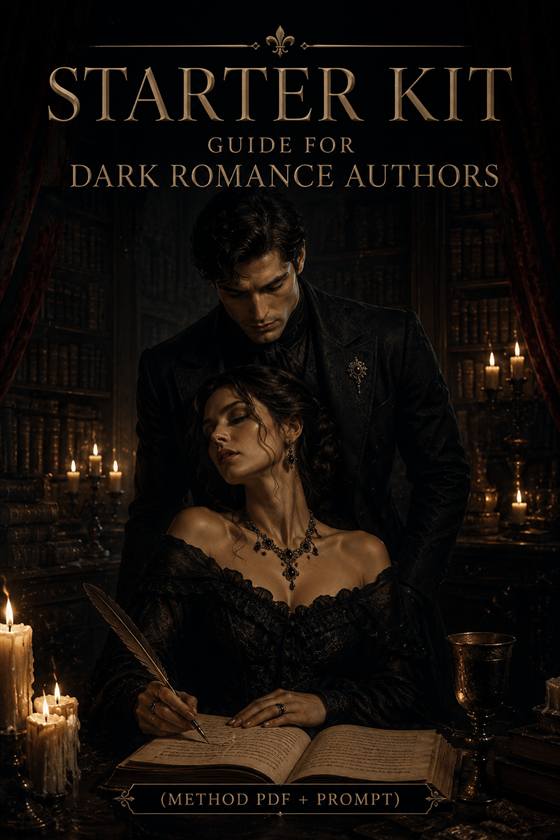
Practical dark romance writing guides — starter kit, dark-hero system, and craft tools in the Dramance writers club.

FAQ
Why does posting every day stop working for so many authors?
Feeds are crowded with content made by people whose job is making content, and trends move faster than a writer working on a next book can follow. A book is a slow, deep product advertised in the fastest, shallowest format available. When the routine asks for more hours and returns less response, the method has stopped working. That is a judgment on the tool, not on the authors.
What is an interactive first chapter?
A short version of a story’s opening. Readers step into the scene, meet the heroine, encounter the villain or love interest, and make a few choices. It is a door into the book, not a replacement for it. When the chapter ends, the next step is the book.
What makes a first chapter work as a hook?
Start with the heroine wanting something concrete. Bring the primary tension in early. Give the villain a reason a reader can half agree with. End on a door — a question, a threat, a promise, or a decision — rather than a wall. Cut backstory, long travel, waking-up routines, and room descriptions the chapter does not need.
Where should choices go in a playable opening?
Put them at moments of character, not logistics. Answering honestly or lying reveals who the heroine is. Use a few choices, so the author’s voice and pacing stay in control. Let a choice change the tone of the next scene rather than split the plot, and place the biggest choice near the end.
How long should a playable first chapter be?
Short enough to be a taste. One location, or two at most. Three to four characters on stage. One clear arc, so something happens and something changes. Keep the author’s own sentences. Adapting an opening for interaction is not rewriting it from scratch.
Who builds the interactive first chapter on Dramance?
Authors build it themselves in the Wizard, shaping the scenes, the characters, and the choice points, with Dramance helping along the way. Dramance is a platform for interactive stories. The text stays with the author, the rights stay with the author, and the text is not used for training.